What is Tahajjud Prayer?
The Tahajjud prayer is a special night prayer in Islam that you can pray after the Isha prayer and before Fajr. While it is not obligatory, it is highly recommended for anyone who wants to get closer to Allah (SWT) and make their faith stronger. The word “tahajjud” means “to give up sleep”, which shows how much dedication it takes to wake up at night to pray when everyone else is sleeping.
This prayer is known as the best kind of Nafl (voluntary) prayer that you can do at night. It’s also called Qiyam ul Layl. When you pray Tahajjud, it feels like having a private talk with Allah (SWT), where you can ask for forgiveness, guidance, and blessings.
As the saying goes,
“If you want something in your life, and you are not praying Tahajjud for it, do you even want it enough?”
This means that when you really want something, waking up to perform Tahajjud salah shows how serious and sincere you are about asking Allah (SWT) for help.
This guide shows you how to perform Tahajjud prayer step by step, along with its timing, rakats, duas, and benefits.
Quick Answer: Tahajjud prayer consists of at least two rakats, prayed in pairs at any point between Isha and Fajr. The last third of the night offers the best time. Make wudu, intend to pray Tahajjud, recite Al-Fatihah and another surah in each rakat, and end with salam. Then make dua, and close your night prayers with Witr.
Tahajjud Prayer in the Quran and Hadith
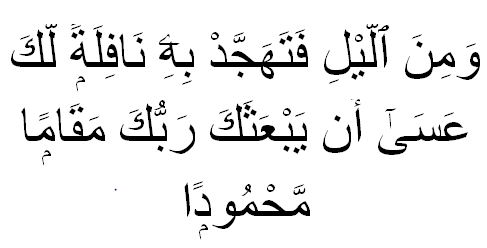
Allah Almighty commands the Prophet (SAW) to pray at night in Surah Al-Isra.
Surah Al-Isra, Ayah 79
‘And rise from your sleep for prayer during part of the night as an additional prayer, so your Lord may raise you to a station of praise.’
The Quran also praises the righteous for their devotion in the dark hours.
Surah Adh-Dhariyat, Ayah 17-18
‘They used to sleep only a little at night, and at dawn they would seek forgiveness.’
The Prophet (SAW) also taught the basic format of the night prayer.
Narrated by Hazrat Abdullah bin Umar (RA):
A man said, ‘O Allah’s Messenger (SAW)! How is the prayer of the night?’ He said, ‘Two rakat followed by two rakat and so on, and when you apprehend the approaching dawn, offer one rakah as Witr.’Sahih al-Bukhari 1137
Tahajjud vs Qiyam ul Layl vs Witr
Readers often mix up these three terms because all of them describe worship at night. Each one has its own meaning.
| Tahajjud | Qiyam ul Layl | Witr | |
|---|---|---|---|
| Meaning | A voluntary night prayer, traditionally offered after some sleep. | Any standing prayer at night, including Tahajjud and Taraweeh. | The closing prayer of the night, with an odd number of rakats. |
| Timing | Between Isha and Fajr, best in the last third of the night. | Between Isha and Fajr. | From after Isha until Fajr, ideally as the final prayer. |
| Ruling | Voluntary (nafl), strongly encouraged. | Voluntary (nafl), open to any amount of night worship. | Sunnah for most scholars, wajib in the Hanafi school. |
Every Tahajjud counts as Qiyam ul Layl, yet not every Qiyam ul Layl counts as Tahajjud. Taraweeh in Ramadan, for example, falls under Qiyam ul Layl.
Importance of Tahajjud Prayer
The Salatul Layl holds a special place in Islam, as it shows how much a person truly wants to connect with Allah (SWT).
Allah Almighty says in the Quran, Surah Al-Isra:
Hazrat Abu Huraira (RA) Narrated that: Allah’s Messenger (SAW) said,
Our Lord, the Blessed, the Superior, comes every night down on the nearest Heaven to us when the last third of the night remains, saying: “Is there anyone to invoke Me, so that I may respond to invocation? Is there anyone to ask Me, so that I may grant him his request? Is there anyone seeking My forgiveness, so that I may forgive him?“
Sahih al-Bukhari: 1145
These words show how valuable Tahajjud is because it’s a time when Allah (SWT) is closest to us, waiting to answer our prayers. If there’s something you really want, praying Tahajjud is one of the best ways to ask for it. It also helps you become stronger by building your willpower and discipline, as you wake up during the quiet part of the night, just to talk to Allah (SWT).
When to Perform Tahajjud Prayer
One of the most frequently asked questions is: When is the best time to pray Tahajjud?
The best time to perform Tahajjud salah is during the last third of the night. This time is significant as we have seen in the above-mentioned hadith that Allah (SWT) descends to the lowest heaven and asks if there is anyone to ask Him.
How to Calculate the Last Third of the Night
Many readers ask when the last third of the night actually begins. The Islamic night runs from Maghrib to Fajr, so follow these four steps:
- Find today’s Maghrib time and tomorrow’s Fajr time in your local prayer timetable.
- Subtract Maghrib from Fajr to get the total length of the night.
- Divide that length by three.
- Subtract one third from the Fajr time. The result marks the start of the last third.
Example: Maghrib falls at 6:00 PM and Fajr at 5:00 AM. The night lasts 11 hours, and one third equals 3 hours and 40 minutes. The last third therefore begins at 1:20 AM.
Prayer times shift every day, so recalculate whenever the seasons change.
Tahajjud Prayer Niyyah
Niyyah means the sincere intention in your heart to pray for Allah’s sake. Tahajjud requires no spoken words, though you may whisper an intention like this one:
‘I intend to pray Tahajjud for two rakats, seeking closeness to Allah Almighty and His pleasure. I pray voluntarily for His sake, seeking His forgiveness and guidance.’
Sincerity matters far more than the exact words you choose.
How Many Rakats Are in Tahajjud Prayer?
Tahajjud has no fixed number of rakats, and two rakats suffice. You can pray more whenever you feel able, but always complete them in pairs. The Prophet (SAW) prayed between seven and thirteen rakats at night, counting Witr and the two-rakat Sunnah before Fajr.
How to Perform Tahajjud Prayer Step by Step
Follow this guide to pray Tahajjud correctly:
- Preparation: Wake up during the last part of the night. Ensure that you are in a state of wudhu (ablution) to cleanse yourself for prayer.
- Niyyah (Intention): Set your intention in your heart to pray the Tahajjud prayer sincerely for the sake of Allah (SWT). While there is no fixed verbal niyyah, you can silently say:
“I intend to pray the Sunnah prayer of Tahajjud two rakaat for Allah (SWT).” - Takbir and Recitation: Begin your prayer with the Takbir, saying “Allahu Akbar” (Allah is the Greatest). In the first rakah, recite Surah Al-Fatihah followed by another surah, such as Surah Al-Kafirun. In the second rakah, recite Surah Al-Fatihah followed by a surah like Surah Al-Ikhlas.
- Ruku and Sujud: Perform the bowing (Ruku) and prostration (Sujud) positions as in your regular daily prayers, saying the prescribed supplications.
- Complete the Rakats: After completing two rakats, you can repeat the process for additional rakats, as long as you do them in pairs. Conclude your Tahajjud prayer by reciting the final Tashahhud and saying the Taslim (salam to the right and left).
What to Recite in Tahajjud Prayer
After Al-Fatihah, recite any surah you know. The Prophet (SAW) often prayed very long recitations at night. Hudhayfah (RA) reported that he once recited Al-Baqarah, An-Nisa, and Al-Imran in a single night prayer (Sahih Muslim 772).
Beginners can start with short surahs such as Al-Ikhlas, Al-Falaq, and An-Nas. Choose a length that lets you stay focused and calm, and lengthen your recitation as your memorisation grows.
Tahajjud Prayer Duas
One of the most rewarding aspects of Tahajjud is making dua after completing your prayer. Here are some important duas you can recite:

Translation: “O Allah, I ask You by Your mercy that envelops everything, to forgive me.”
When the Prophet (PBUH) got up at night to offer the Tahajjud prayer, he used to say:
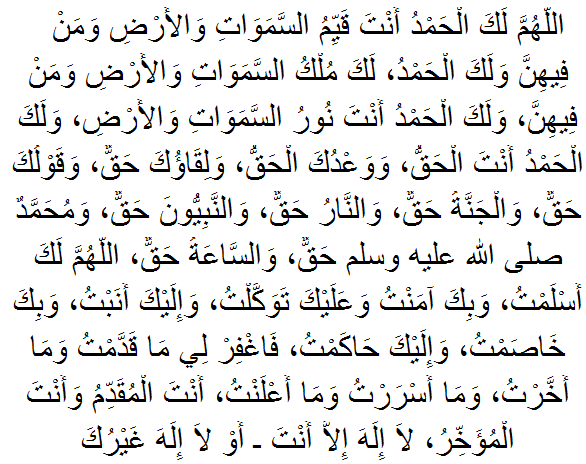
You can also make personal supplications, asking for forgiveness, guidance, or anything that weighs on your heart. This is a prime time for acceptance of dua.
How to Pray Tahajjud and Witr Together
One of the common queries is how to pray Witr after Tahajjud:
- Pray your Tahajjud first, performing as many rak’ahs as you like in pairs (2, 4, 6, or more).
- End your night prayers with Witr, which is usually one or three rak’ahs. Prophet Muhammad (PBUH) emphasized ending the night prayer with an odd number of rak’ahs.
Can You Perform Witr Before Tahajjud?
Yes. If you are unsure whether you will wake up for Tahajjud, you can pray Witr after Isha Namaz.
However, if you do wake up for Tahajjud later, you do not need to repeat Witr. The Prophet Muhammad (PBUH) said, “Make Witr the last prayer of your night” (Sahih al-Bukhari).
Benefits of Tahajjud Prayer
Salatul Layl offers numerous benefits, both spiritually and mentally:
- Deepens Connection with Allah (SWT): The quiet hours of the night provide a unique opportunity for focused worship and personal reflection.
- Increased Forgiveness and Blessings: Praying during the last third of the night when Allah’s mercy is at its peak brings increased chances of receiving His blessings.
- Dua Acceptance: We have a firm belief that any dua made during Tahajjud namaz has a higher chance of being accepted.
- Develops Discipline: Waking up regularly for Tahajjud builds discipline and willpower, which positively impacts other areas of life.
- Spiritual Peace: Consistently performing Tahajjud salaah brings inner peace and clarity of mind.
How to Wake Up for Tahajjud
Waking up is the hardest part for most people. These habits make it easier:
Sleep early: Go to bed soon after Isha, and keep your dinner light.
Take a short midday nap: Scholars recommend a brief qaylulah to restore energy for the night prayer.
Set two alarms: Keep one beside you and place the other across the room.
Ask Allah before sleeping: Make a sincere intention and a short dua that Allah helps you wake.
Break the knots of Shaytan: The Prophet (SAW) taught that Shaytan ties three knots on a sleeper. Dhikr, wudu, and prayer untie them one by one (Sahih al-Bukhari 1142).
Start small: Pray two rakats once or twice a week, then add more nights as the habit grows.
Common Mistakes in Tahajjud Prayer
Avoid these frequent errors so your night prayer stays sincere and sustainable:
- Missing Fajr: Never let a late night of Tahajjud cost you the obligatory Fajr prayer.
- Praying an odd number of rakats: Complete your rakats in pairs, and reserve the odd number for Witr.
- Rushing through the prayer: Slow down, because night prayer thrives on presence and calm.
- Overburdening yourself: Choose a pace you can keep, since steady practice beats a short burst of exhaustion.
- Asking only for worldly needs: Ask for forgiveness and guidance alongside your material needs.
- Announcing your night prayer: Keep it private, because the value lies in sincerity between you and Allah.
Common Questions about Tahajjad Salah
Q1. What is the difference between Tahajjud and Qiyam-ul-Layl?
Qiyam-ul-Layl refers to any prayer performed after Isha and before Fajr, including Tahajjud. However, Tahajjud specifically means waking up after sleeping to pray. All Tahajjud prayers are part of Qiyam-ul-Layl, but not all Qiyam-ul-Layl prayers are Tahajjud.
Q2. How many rakats in Tahajjud prayer?
There is no fixed number of rakats for Tahajjud. You can pray a minimum of 2 rakats and add more in pairs. The Prophet Muhammad (PBUH) is known to have prayed between 2 and 8 rakats, depending on his strength and ability.
Q3. Can I pray Tahajjud without sleeping?
While Tahajjud traditionally involves waking up after a period of sleep, you can still perform Qiyam-ul-Layl without sleeping if you prefer. However, it is best to rest for a short while before waking up to pray Tahajjud.
Q4. What is the best time to pray Tahajjud?
The best time to pray Tahajjud is during the last third of the night, which is the period just before Fajr. This is considered the most blessed time, as Allah (SWT) descends to the lowest heaven and listens to the prayers of His worshippers.
Q5. Is Tahajjud Sunnah or Nafl?
Tahajjud is considered a Nafl (voluntary) prayer. While it is not obligatory (Fard) or classified as Sunnah Mu’akkadah (emphasized Sunnah), it is highly recommended (Mustahabb) because of its benefits and the practice of the Prophet Muhammad (PBUH), who would frequently pray Tahajjud. Observing it brings immense spiritual rewards, but it is not required.
Q6. What should I recite in Tahajjud namaz?
You can recite any Surah after Surah Al-Fatihah in each rakah of Tahajjud. The Prophet (PBUH) often recited Surah Al-Kafirun in the first rakah and Surah Al-Ikhlas in the second, but it is flexible, and you can choose other Surahs as well.
Q7. Can women pray Tahajjud during menstruation?
Women are excused from performing prayers, including Tahajjud, during menstruation. However, they can still make dua, engage in dhikr (remembrance of Allah), and recite Quranic verses from memory.
Q8. What is the Niyat (Intention) for Tahajjud Prayer?
The Tahajjud prayer niyat is a sincere intention to perform the salah for Allah’s sake. You do not need to say it out loud; it is enough to have the intention in your heart. For example:
“I intend to pray Tahajjud two rak’ahs for the pleasure of Allah (SWT).”
The sincerity of your intention matters more than the specific words used.
Conclusion
Tahajjud prayer (Salatul Layl) is a special opportunity for Muslims to connect deeply with Allah (SWT), seek forgiveness, and reflect on their faith. This night prayer offers flexibility in terms of rakats, with no strict number required. Through this prayer, believers find peace, inner strength, and solutions to life’s challenges. Whether you are just starting your journey with Tahajjud or are an experienced practitioner, every moment spent in prayer brings immense rewards.
So, will you stay asleep or rise for the Tahajjud prayer? Share this article with your friends and inspire them to experience the beauty of this night prayer.