Historical Places in Turkey
Quick answer: The main Islamic historical places in Turkey are Hagia Sophia, the Blue Mosque, the Süleymaniye Mosque, Topkapı Palace and the Eyüp Sultan Mosque in Istanbul, the Tomb of Yusa on the Bosphorus, the Selimiye Mosque in Edirne and the Mevlana Museum in Konya. Most took their present form under the Ottomans between the 15th and 17th centuries. Hagia Sophia is older, and the Mevlana mausoleum dates to the Seljuk period.
Two of these sites have changed use in the last hundred years. Hagia Sophia became a museum in 1935 and has been a mosque again since 2020. The Mevlana mausoleum has been a museum since 1927. Check how each site is used today before you plan a visit.
Each entry below gives the builder, the dates and what the site is used for now. Where a claim rests on tradition and not on documented history, the text says so. This page writes “Turkey” because that is how most readers search; the country’s official name is Türkiye.
| Site | Where | Dates | Use Today |
|---|---|---|---|
| Hagia Sophia | Istanbul | Built 532–537; mosque from 1453 | Mosque since 10 July 2020 |
| Blue Mosque (Sultan Ahmed Mosque) | Istanbul | 1609–1617 | Active mosque |
| Süleymaniye Mosque | Istanbul | 1550–1557 | Mosque complex with the tombs of Suleiman and Hürrem |
| Topkapı Palace | Istanbul | Sultans’ residence from after 1453 to 1856 | Houses the Chamber of the Holy Relics |
| Eyüp Sultan Mosque | Istanbul | 1458; rebuilt 1798–1800 | Mosque beside the traditional tomb of Abu Ayyub al-Ansari |
| Tomb of Yusa | Beykoz, Istanbul | Mosque and lodge 1755–56 | Shrine and mosque; the identification with Joshua is a local tradition |
| Selimiye Mosque | Edirne | 1569–1575 | Mosque; UNESCO World Heritage Site since 2011 |
| Mevlana Museum | Konya | Mausoleum completed 1274 | Museum since 1927 |
Islamic Historical Places in Turkey, One by One
1. Hagia Sophia, Istanbul
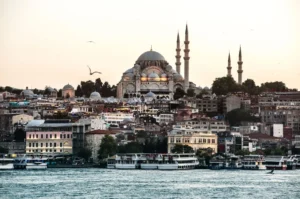
Hagia Sophia began as a Byzantine church. Emperor Justinian had it built between 532 and 537 after the Nika riots destroyed the earlier basilica. Earthquake damage in 558 brought the dome down, and it was rebuilt higher by 562. When the Ottomans took Constantinople on 29 May 1453, Mehmed II ordered the church converted into a mosque, and it served as one for almost five centuries.

In 1935 it became a museum. On 10 July 2020 Turkey’s Council of State annulled that decision, and Hagia Sophia has been a mosque again since. Worshippers use the ground-floor prayer hall. Foreign visitors have paid an entrance fee since 15 January 2024 to use the upper-gallery route, where the Byzantine mosaics are. Visitors are asked to cover their shoulders and knees, and women to cover their hair. Expect the visitor route to close around prayer times, especially on Fridays.
2. The Blue Mosque (Sultan Ahmed Mosque), Istanbul
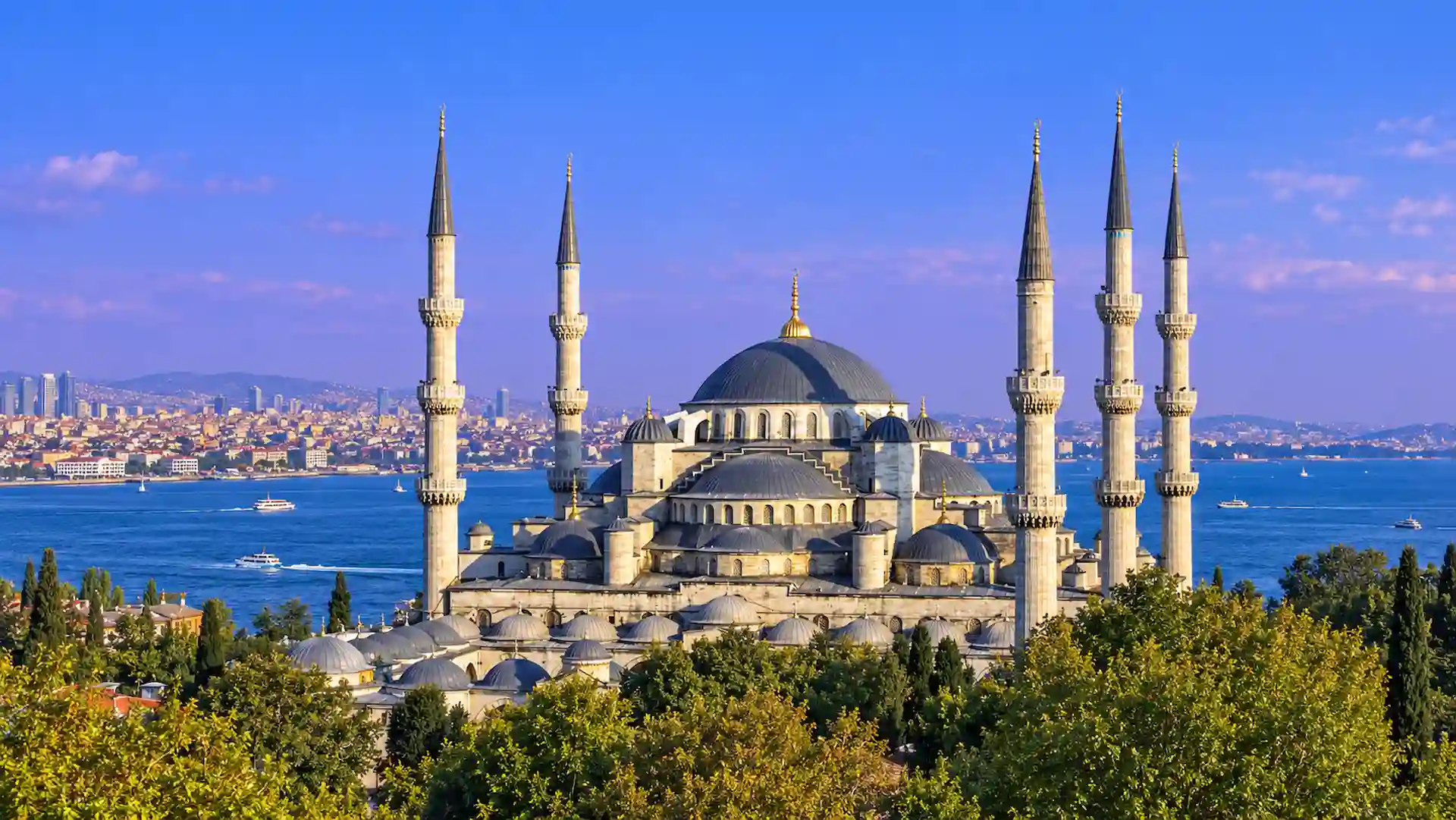
Sultan Ahmed I commissioned the mosque, and the architect Sedefkâr Mehmed Ağa built it between 1609 and 1617; some inscriptions carry the year 1616. It has six minarets.

Ahmed I’s tomb is a separate building to the northeast of the mosque, beside the Hippodrome. His son Osman II completed it after Ahmed’s death. The Blue Mosque is an active place of worship, and non-Muslim visitors usually enter by the side entrances. A restoration that began in 2018 ended with the mosque reopening in April 2023.
3. Süleymaniye Mosque, Istanbul
Sultan Suleiman I commissioned the mosque and the imperial architect Mimar Sinan designed it. An inscription gives 1550 as the year the foundation was laid and 1557 as the opening, and work on the complex finished around 1559.

The mosque itself is not a mausoleum. Suleiman and his wife Hürrem Sultan are buried in a walled cemetery behind the qibla wall, which is the wall that faces Makkah. Each has a separate octagonal tomb (türbe), and Suleiman’s was built between 1566 and 1568. The Süleymaniye is one of four components of the Historic Areas of Istanbul, which UNESCO inscribed as a World Heritage Site in 1985.
4. Topkapı Palace and the Chamber of the Holy Relics, Istanbul
Topkapı Palace was the Ottoman sultans’ residence after the conquest of 1453, until Sultan Abdulmecid I moved to Dolmabahçe Palace in 1856. Visitors of Islamic interest usually come for the Chamber of the Holy Relics, which holds about 600 items.

These include a cloak attributed to the Prophet Muhammad (SAW), swords attributed to him and to Abu Bakr, Umar, Uthman and Ali (RA), and objects attributed to earlier prophets, among them a staff attributed to Musa (AS). Sultan Selim I brought most of the relics from Cairo after he conquered the Mamluk lands in 1517. In 1918 and 1919 General Fahrettin Pasha sent further relics from Madinah to Istanbul. The attributions rest on Ottoman custody and tradition, so treat them as traditional identifications.
5. Eyüp Sultan Mosque, Istanbul
The Eyüp Sultan complex stands beside the tomb traditionally identified as that of Abu Ayyub al-Ansari (RA), a Companion of the Prophet (SAW) from the Ansar, the Muslims of Madinah who welcomed him. He is believed to have died during an Arab siege of Constantinople in the 7th century.
Mehmed II had the mosque built in 1458, five years after the conquest. According to the account passed down, his teacher Akşemseddin dreamed of building a mosque at Abu Ayyub’s burial place, and the tomb was then found. Selim III rebuilt the mosque between 1798 and 1800. Ottoman officials and members of the royal family are buried nearby. The location of the grave rests on this Ottoman-era account, so it is a historical report and not a settled identification.
6. Selimiye Mosque, Edirne
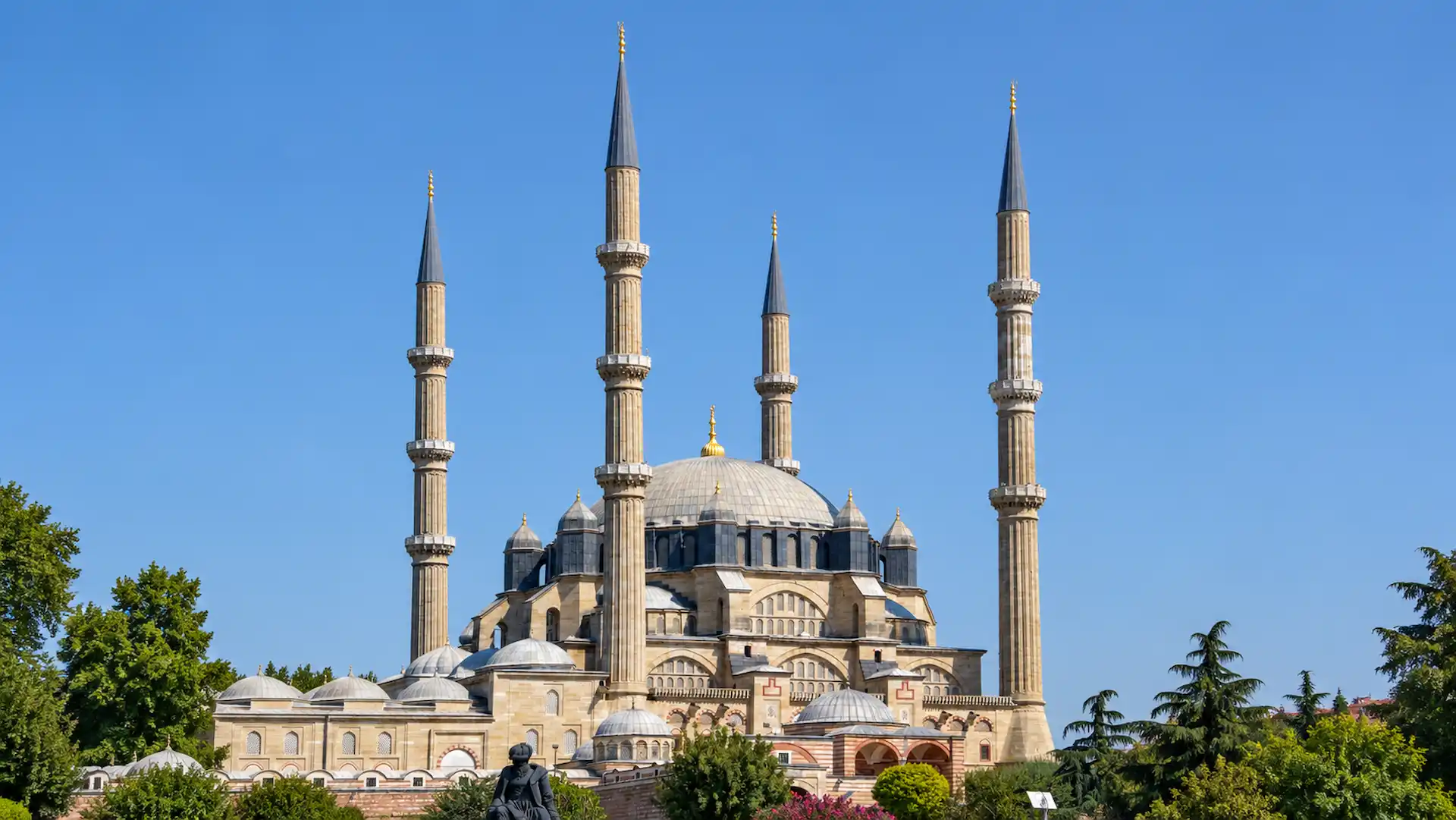
Sinan designed the Selimiye Mosque for Sultan Selim II. Construction began in 1569 and finished in 1575, the year after Selim died. Its main dome rests on eight columns set close to the walls, which was an innovation when it was built. Eighteen smaller domes surround it, and four slender minarets stand at the corners. UNESCO inscribed the mosque with its complex as a World Heritage Site in 2011.
7. The Tomb of Yusa (Joshua’s Hill), Beykoz
On a hill above the Bosphorus in Anadolukavağı, in Istanbul’s Beykoz district, stands a tomb that popular belief attributes to Yusha’ ibn Nun (Joshua), the attendant of Musa (AS). The belief is recorded from the 16th century, when the grave was reportedly discovered by Beşiktaşlı Yahyâ Efendi, who died in 1570. Before that, the hill was associated with the Greek hero Herakles, and a Byzantine church stood there.

History does not settle the identification. Several places in Syria, Jordan and Iraq also claim Joshua’s grave, and the Ottoman writer Ayvansarayi argued that his real tomb lies near Nablus or Aleppo. The mosque and lodge beside the Beykoz tomb were built in 1755 and 1756 by Grand Vizier Mehmed Said Pasha and rebuilt in 1863 and 1864. Treat the site as a place of local tradition, with views over the Bosphorus.
8. Mevlana Museum, Konya
Jalal al-Din Rumi, the 13th-century poet and Sufi teacher known in Turkey as Mevlana, died on 17 December 1273 and was buried in Konya. His successor Hüsamettin Çelebi decided to build a mausoleum over the grave, and it was completed in 1274. A dome covered in turquoise tiles marks the building, which became the lodge (tekke) of the Mevlevi order.

A decree of 6 April 1926 turned the mausoleum and lodge into a museum, and it opened on 2 March 1927. It was renamed the Mevlâna Museum in 1954 and received 3.4 million visitors in 2019, more than any other museum in Turkey that year.
Visiting These Places Respectfully
- Check the day’s prayer times. Active mosques close to visitors at prayer, and Friday closures are longer.
- Cover your shoulders and knees. Women are asked to cover their hair in mosques. Remove your shoes where staff ask you to, because rules differ between sites.
- Check entry rules and fees on each site’s official page before you travel. Hagia Sophia changed its rules for foreign visitors in January 2024, so older guides may be wrong.
- Plan by area. The Tomb of Yusa is on the Anatolian side of the Bosphorus, so it needs a separate trip from the sites in the old city.
Common FAQs
Is Hagia Sophia a mosque or a museum now?
It is a mosque. Turkey’s Council of State annulled its museum status on 10 July 2020, and it had been a museum since 1935. Worshippers use the ground floor, and foreign visitors pay an entrance fee for the upper-gallery route, in force since 15 January 2024.
Can non-Muslims visit the Blue Mosque?
Yes. The Blue Mosque is an active mosque, and non-Muslim visitors usually enter by the side entrances. Dress modestly and check the day’s prayer times, because visits pause around prayer. The tomb of Ahmed I is a separate building to the northeast of the mosque, beside the Hippodrome.
Is the Tomb of Yusa really Prophet Joshua’s grave?
Nobody can confirm it. The attribution is a local tradition recorded from the 16th century, and other places in Syria, Jordan and Iraq make the same claim. The Ottoman writer Ayvansarayi placed the real tomb near Nablus or Aleppo.
Which Companion of the Prophet is buried in Istanbul?
Abu Ayyub al-Ansari (RA) is traditionally believed to be buried at the Eyüp Sultan Mosque. He is said to have died during an Arab siege of Constantinople in the 7th century. The tomb was identified in 1458, so the location rests on an Ottoman-era account.
Is the Mevlana Museum a mosque?
No. It is a museum. The building is Rumi’s mausoleum and a former Mevlevi lodge, and it has been a museum since it opened on 2 March 1927.