Salah is mandatory for every adult Muslim who is sane to pray five times a day at specified times. It is the second of the five pillars of Islam. It is referred to in the Quran as a duty fixed to its times. The reason the Quran gives for it is not a benefit to Allah but a change in the person praying: prayer keeps you in contact with Allah and holds you back from indecency and wrongdoing.
You will also see salah written as salat, namaz or prayer. They all mean the same act of worship.
Why Salah is Obligatory
Salah is not a recommended habit or a wellbeing practice. It is a duty, and the Quran states the obligation directly.
إِنَّ ٱلصَّلَوٰةَ كَانَتْ عَلَى ٱلْمُؤْمِنِينَ كِتَٰبًۭا مَّوْقُوتًۭا
“Indeed, prayer has been decreed upon the believers a duty fixed to its times.”
Surah an-Nisa 4:103, the closing clause of the verse.
Two things follow from that wording. Salah is fard, an obligation, not a choice. And it is tied to times, which is why there are five daily prayers rather than prayer whenever a person feels like it. Status: AGREED BY ALL FOUR SCHOOLS
The Prophet (SAW) placed salah second among the five things Islam is built on, after the testimony of faith and before zakat, Hajj and the fast of Ramadan.
Ibn Umar (RA) reported that the Prophet (SAW) said Islam is built on five: the testimony that there is no god but Allah and that Muhammad is His Messenger, establishing the prayer, paying zakat, Hajj, and fasting Ramadan. Sahih al-Bukhari 8, Book 2, hadith 1. Status: SAHIH
That is the short answer to why salah matters more than any other act of daily worship. It is one of the five pillars of Islam, and the only one a Muslim performs five times every day.
What the Quran says about why Muslims pray
The Quran gives reasons, not only the command. Three are worth knowing because they answer what prayer is actually for.
It holds you back from wrongdoing
ٱتْلُ مَآ أُوحِىَ إِلَيْكَ مِنَ ٱلْكِتَٰبِ وَأَقِمِ ٱلصَّلَوٰةَ ۖ إِنَّ ٱلصَّلَوٰةَ تَنْهَىٰ عَنِ ٱلْفَحْشَآءِ وَٱلْمُنكَرِ ۗ وَلَذِكْرُ ٱللَّهِ أَكْبَرُ ۗ وَٱللَّهُ يَعْلَمُ مَا تَصْنَعُونَ
“Recite what has been revealed to you of the Book, and establish the prayer. Indeed, the prayer restrains from indecency and wrongdoing. And the remembrance of Allah is greater. Allah knows what you do.”
Surah al-Ankabut 29:45.
This is the verse most often quoted when someone asks what prayer achieves. It does not promise that a person who prays will never sin. It describes what regular prayer works against. Stopping five times a day to stand before Allah makes it harder to carry on with something you know is wrong.
It exists for the remembrance of Allah
إِنَّنِىٓ أَنَا ٱللَّهُ لَآ إِلَٰهَ إِلَّآ أَنَا۠ فَٱعْبُدْنِى وَأَقِمِ ٱلصَّلَوٰةَ لِذِكْرِىٓ
“Indeed, I am Allah. There is no god but Me, so worship Me and establish the prayer for My remembrance.”
Surah Ta-Ha 20:14, spoken to Musa (AS).
Prayer is tied here to tawhid, the oneness of Allah. The command to pray follows straight from the statement that there is no god but Him. Prayer is how that belief is acted on, every day, rather than held only as an idea.
It is something to seek help through
يَٰٓأَيُّهَا ٱلَّذِينَ ءَامَنُوا۟ ٱسْتَعِينُوا۟ بِٱلصَّبْرِ وَٱلصَّلَوٰةِ ۚ إِنَّ ٱللَّهَ مَعَ ٱلصَّٰبِرِينَ
“O you who believe, seek help through patience and prayer. Indeed, Allah is with the patient.”
Surah al-Baqarah 2:153, and the same instruction at 2:45.
The Quran also tells believers to guard their prayers, naming the middle prayer in particular, and to stand before Allah devoutly (Surah al-Baqarah 2:238).
What the hadith say about salah
It washes away small sins
Abu Hurairah (RA) reported that the Prophet (SAW) asked his Companions whether any dirt would remain on a man who had a river at his door and bathed in it five times a day. They said none would remain. He said the five daily prayers are like that, and that through them Allah wipes away sins. Sahih al-Bukhari 528, Book 9, hadith 7. Status: SAHIH
Scholars understand this of minor sins. Major sins need repentance of their own, and some carry other obligations with them.
It is the first thing a person is asked about
Abu Hurairah (RA) reported that the first of a servant’s deeds to be reckoned on the Day of Judgement is the prayer. If it is sound, the person has succeeded. If it is defective, Allah tells the angels to look for voluntary prayers to make up what is missing from the obligatory ones, and the rest of the deeds are judged the same way. Jami at-Tirmidhi 413, Book of Salah. Tirmidhi called it Hasan Gharib. Graded as sound by Ali Zai. Status: HASAN
Notice the second half, which is usually left out when this hadith is quoted. Shortfalls in the obligatory prayers can be made up from voluntary prayers. The hadith is not only a warning. It is also a reason to pray the sunnah and nafl prayers.
What Salah Asks of the Person Who Prays
Salah is often described as bringing calm, discipline and a sense of community. Those things are real, and many people find them. But they are effects some people notice, not the reason the prayer was commanded, and no source promises them. Describing salah mainly as a wellbeing routine gets it the wrong way round.
What the sources do say it asks of you:
- Keeping time. The prayer is fixed to its times (4:103), so the day is arranged around it rather than the other way round.
- Attention. The Quran calls prayer heavy except for those who are humble before Allah (2:45). Reciting the words without the mind present is a known problem, not a small one. There is more on this in our guide to attaining perfection in salah.
- Intention. Salah begins with niyyah, and the act is for Allah rather than for an audience.
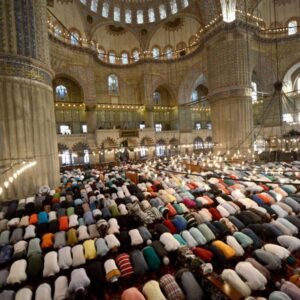
- Turning up with others. Men are addressed in the texts on congregational prayer, and Jummah gathers the community once a week.
If you are learning the prayer itself rather than why it matters, start with how to pray salah.
What happens if you miss a prayer
If you forget or oversleep
Anas (RA) reported that the Prophet (SAW) said: whoever forgets a prayer should pray it when he remembers it, and there is no expiation for it other than that. He then recited: “establish the prayer for My remembrance”.
Sahih al-Bukhari 597, Book 9, hadith 72. SAHIH
Pray it as soon as you remember. Nothing else is required and there is no extra penalty. Our guide to making up qada prayers covers how to handle prayers missed over a longer period. AGREED BY ALL FOUR SCHOOLS
If someone stops praying altogether
This is a serious matter, and the schools do not answer it the same way, so the honest answer names the difference rather than picking one side.
What is agreed: abandoning salah deliberately is among the major sins. And denying that salah is obligatory at all, as opposed to failing to pray it, puts a person outside Islam by agreement.
Jabir (RA) reported that the Prophet (SAW) said that between a man and shirk and kufr stands the abandonment of prayer. Sahih Muslim 82a, Book of Faith, Book 1, hadith 153. Status: SAHIH
What scholars differ on is how that narration is applied to someone who believes salah is obligatory but does not pray out of laziness.
| School | Is he a disbeliever? | Worldly consequence stated |
|---|---|---|
| Hanafi | No. A major sin | Disciplined and detained by a judge until he prays. Not executed |
| Maliki | No. A major sin | Subject to a prescribed punishment by the state if he refuses to repent |
| Shafi’i | No. A major sin. Al-Nawawi notes that kufr concerns belief, and this person’s belief in the obligation is intact. | As above |
| Hanbali | Reports differ. Ibn Qudama in al-Mughni is cited for the position that he remains a Muslim and that the narrations calling him a disbeliever mean he resembles the disbelievers. Other sources report the school as holding it to be disbelief. | Not settled in the sources checked |
DIFFERS BY SCHOOL: Egypt’s Dar al-Ifta, in fatwa 7936, states that someone who leaves prayer out of laziness is disobedient and sinful, while someone who denies its obligation is a disbeliever.
Two things matter more than the label here. A person who has stopped praying is still a Muslim being addressed by the Quran, and the response the sources call for is to start praying and repenting, not to be written off. And this is a question where you should ask a qualified scholar about your own case rather than settle it from an article.
How to Start Praying Again
If you have not prayed for a long time, the practical route is short.
- Start with the next prayer whose time is now. Do not wait for a clean slate.
- Make tawbah. Repentance does not require a ceremony. It requires stopping, regret and the intention not to return.
- Fix the five obligatory prayers before adding voluntary ones.
- Ask a scholar you trust about making up the prayers you missed, because what is owed depends on your circumstances and the school you follow.
- Keep istighfar going in between.
This is educational information, not a personal fatwa. For your own situation, ask a qualified scholar.
Questions About the Importance of Salah
Why is salah so important in Islam?
Because it is a fixed duty rather than an optional act, and because of what the Quran says it does. Prayer is decreed on believers at set times (4:103), it restrains a person from indecency and wrongdoing (29:45), and it exists for the remembrance of Allah (20:14). The Prophet (SAW) placed it second among the five pillars (Sahih al-Bukhari 8), and it is the first deed a person is reckoned for on the Day of Judgement (Jami at-Tirmidhi 413, hasan).
Is salah fard or sunnah?
The five daily prayers are fard, obligatory on every adult Muslim of sound mind. This is agreed by all four schools. The sunnah and nafl prayers around them are voluntary, and the hadith in Tirmidhi 413 says they can make up what is lacking in the obligatory ones.
What does the Quran say about prayer?
It commands it and gives reasons for it. The clearest verses are 4:103 on the obligation and its times, 29:45 on prayer restraining a person from wrongdoing, 20:14 on prayer being for the remembrance of Allah, 2:45 and 2:153 on seeking help through patience and prayer, and 2:238 on guarding the prayers.
What happens if you miss one prayer?
Pray it as soon as you remember. The Prophet (SAW) said that whoever forgets a prayer should pray it when he remembers, and that there is no expiation for it besides that (Sahih al-Bukhari 597). A prayer missed deliberately is a different matter and is sinful, and what is owed depends on your situation, so ask a scholar.
Is someone who does not pray still a Muslim?
Scholars differ, and this page sets out the difference above rather than choosing for you. The Hanafi, Maliki and Shafi’i schools treat abandoning prayer out of laziness as a major sin and not disbelief, provided the person still accepts that prayer is obligatory. Reports of the Hanbali position differ. Denying the obligation itself is disbelief by agreement. Ask a qualified scholar about any real case.