Six Kalimas: Foundation of Islamic Belief and Spiritual Growth
As Muslims, the Six Kalimas are much more than just phrases—they are the foundation of our beliefs, way of life, and spiritual connection to Allah (SWT). Generations have passed down these timeless words, and they carry deep meanings that help us reaffirm the core principles of Islam. They aren’t simply meant for recitation but for understanding, reflection, and integration into our daily lives.
For children and adults alike, the Six Kalimas are tools for cultivating a deeper relationship with Allah (SWT), grounding faith, and fostering spiritual resilience. Each one conveys a powerful message: from the oneness of Allah (SWT) to the continuous journey of seeking forgiveness and rejecting all forms of sin.
Why Are They Called “Kalimas”?
The Arabic word “Kalima” simply means “word” or “statement”. Islamic tradition groups these six specific statements together. Each one addresses a different pillar of belief: declaring faith, bearing witness, glorifying Allah, affirming His oneness, seeking forgiveness, and rejecting disbelief.
Together, the six form a complete cycle of belief and practice. A Muslim moves from affirming faith in the First Kalima to actively rejecting sin and disbelief in the Sixth. Six short statements cover the full spiritual journey.
The Six Kalimas at a Glance
| Name | Core Meaning | |
|---|---|---|
| 1st | Kalima Tayyibah | Declares there is no god but Allah, and Muhammad (SAW) is His messenger. |
| 2nd | Kalima Shahadah | Bears witness to Allah’s oneness and the Prophet’s (SAW) messengership. |
| 3rd | Kalima Tamjeed | Glorifies and praises Allah’s greatness and power. |
| 4th | Kalima Tawheed | Affirms Allah’s oneness and His power over life and death. |
| 5th | Kalima Astaghfar | Seeks Allah’s forgiveness for known and unknown sins. |
| 6th | Kalima Radde Kufr | Rejects disbelief, polytheism, and all major sins. |
“But Why is it important to engage with the Six Kalimas regularly? “
The Six Kalimas are a powerful tool to strengthen your faith. Furthermore, they serve as a shield, protecting you from harm. Incorporating the Kalimas into your daily routine can help you gain profound spiritual benefits. This practice fosters peace, security, and closeness to Allah (SWT).
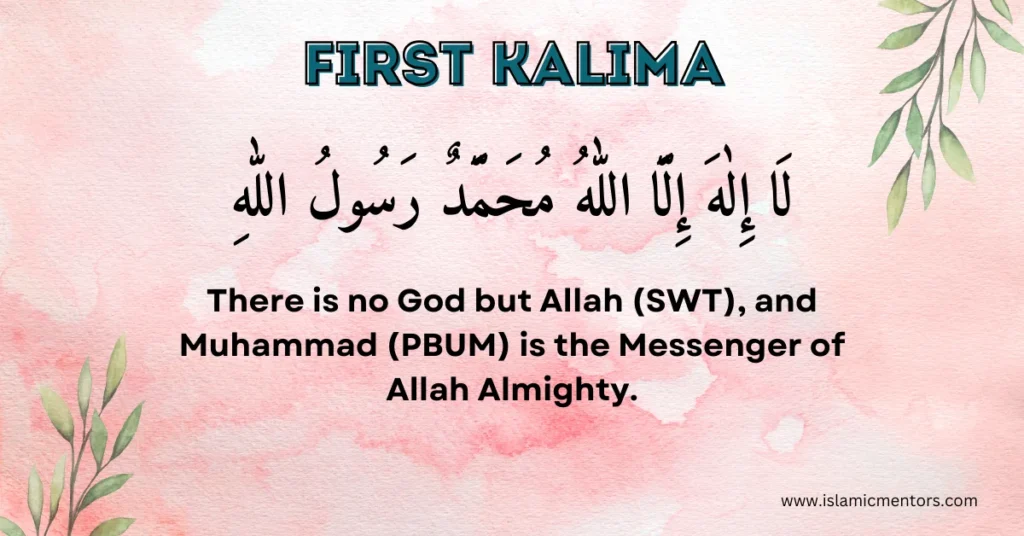
First Kalima: Kalima Tayyibah (Word of Purity)
The First Kalima declares the central belief in Islam: the oneness of Allah (SWT) and the finality of the Prophet Muhammad (PBUH) as His messenger. We recite the First Kalima to strengthen our faith and renew our devotion to Allah (SWT).
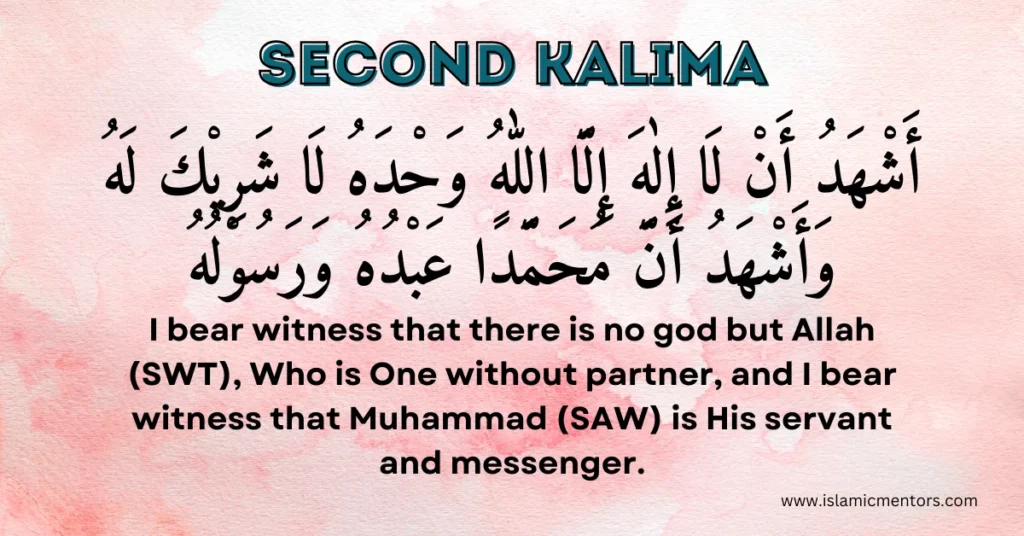
Second Kalima: Kalima Shahadah (Word of Testimony)
The Second Kalima highlights the importance of bearing witness to the oneness of Allah (SWT) and acknowledging Prophet Muhammad as His servant and messenger. Reciting this strengthens your commitment to the Islamic faith and its core principles.
Kalima Shahadah vs the Shahada
Many readers confuse the Second Kalima with “the Shahada”, the testimony of faith counted among the Five Pillars of Islam. The confusion makes sense, since both phrases share the same Arabic root meaning “to bear witness”.
As one of the Five Pillars, the Shahada refers to the core testimony: “There is no god but Allah, and Muhammad is the Messenger of Allah.” A person recites this simple testimony sincerely to enter Islam. Kalima Shahadah expands on that same testimony with fuller wording. It adds the phrase “alone, without any partner” to emphasize Allah’s absolute oneness. Either version affirms the same core belief, just with a different length of wording.
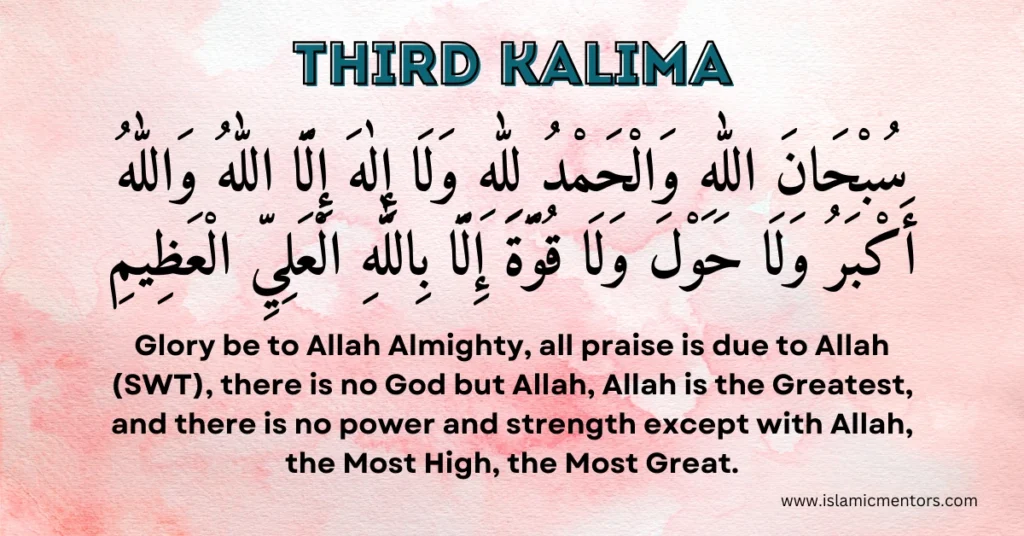
Third Kalima: Kalima Tamjeed (Word of Glorification)
The Third Kalima powerfully glorifies and praises Allah (SWT). It reminds us of His greatness and our reliance on Him (SWT). This Kalima helps cultivate humility and gratitude toward Allah’s (SWT) blessings.
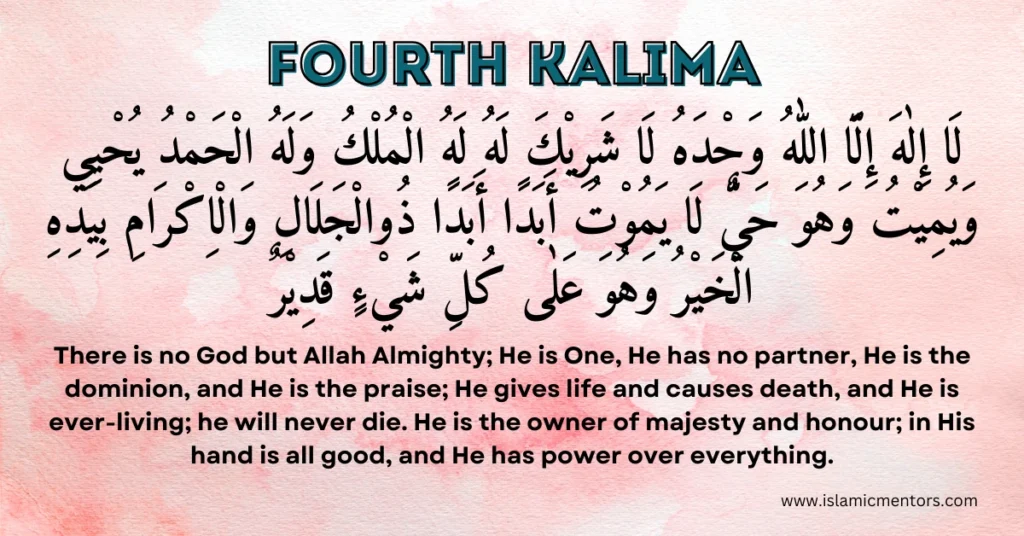
Fourth Kalima: Kalima Tawheed (Word of Oneness)
Fourth Kalima to strengthen our belief in Allah’s (SWT) oneness and His power over life and death. This Kalima is a declaration of faith and a reminder of Allah’s (SWT) supreme power over life and death.
Fifth Kalima: Kalima Astaghfar (Word of Seeking Forgiveness)
The Fifth Kalima is a sincere supplication for forgiveness from Allah (SWT). It encourages us to seek forgiveness for both known and unknown sins.

Sixth Kalima: Kalima Radde Kufr (Word of Rejecting Disbelief)
The Sixth Kalima rejects the acts of disbelief and all forms of sin. It is a powerful reminder of the importance of sincerity in worship and rejecting evil.

Benefits of Reciting the Six Kalimas
Reciting the Six Kalimas offers a powerful way to stay grounded in faith and aligned with Islamic principles. Each Kalima acts as a reminder of our commitment to Allah (SWT), reinforcing sincerity in our worship and daily actions. They also serve as a source of comfort during difficult times, instilling hope and patience. Here are some benefits of Six Kalmas:
- Strengthens Faith: Reciting the Six Kalmas strengthens the core beliefs of Islam, helping us connect deeply with our Creator and strengthen our faith.
- Forgiveness: They serve as a means to seek forgiveness for both known and unknown past sins.
- Protection from Evil: Regular recitation serves as a safeguard for our faith. It protects us from harmful thoughts, negative influences, and actions that stray from righteousness.
- Spiritual Peace: Engaging in the remembrance of Allah (SWT) (Dhikr) through the Kalimas cultivates a profound sense of inner peace and spiritual balance.
- Increased Gratitude: Incorporating the 6 Kalimas into daily life helps us nurture a spirit of gratitude. It allows us to recognize Allah’s (SWT) continuous blessings and reinforces our spiritual strength.
Best Times to Read the Kalmas
Reciting the Six Kalimas at specific moments throughout the day can help strengthen your faith and bring spiritual peace. Here are some of the best times to read the Kalmas for maximum benefit:
- After Fajr and Isha Prayers: Start and end your day by reciting the 6 Kalimas, which keep your heart connected to Allah (SWT) and serve as a spiritual shield throughout the day and night.
- During Morning and Evening Dhikr: Incorporating the Kalimas into your daily remembrance (dhikr) routine helps you reflect upon Allah’s (SWT) greatness. It also encourages you to seek His (SWT) guidance and forgiveness.
- Kalima Istighfar is especially effective when seeking forgiveness from Allah (SWT). Reciting it during times of reflection or after making a mistake can help seek pardon from Allah (SWT).
- Before Sleeping: Reading the Kalimas before bed can provide peace and protection, ensuring you end your day in remembrance of Allah (SWT) and submission to His (SWT) will.
- When Feeling Troubled or Anxious: Reciting the Kalimas, especially Kalima Tamjeed (Glorification of Allah (SWT)), can bring comfort and calmness when facing challenges. It serves as a reminder of Allah’s (SWT) power and mercy.
- During Times of Repentance and Renewal: Reflecting on Kalima Shahadat and Kalima Tawhid during times of personal repentance or spiritual renewal strengthens your faith. It also deepens your commitment to the oneness of Allah (SWT).
Making the recitation of the Six Kalimas a regular part of your daily routine draws you closer to Allah (SWT). It fosters a sense of inner peace and spiritual strength.
How to Memorize the Six Kalimas
Memorizing the 6 Kalimas can be a deeply rewarding spiritual exercise. Here are some techniques to help:
- Repetition: Recite each Kalima daily, especially after prayers, to build familiarity and reinforce memory.
- Visualization: Use flashcards with the Arabic text on one side and the translation on the other. Reviewing these cards regularly helps strengthen memory.
- Audio Recitation: Listen to recordings of the Kalimas being recited, repeating after each line. This helps with pronunciation and embeds the words in memory.
- Group Study: Studying with family or friends creates a supportive environment, making memorization easier and more enjoyable.
- Set Small Goals: Focus on memorizing one Kalima at a time, aiming to learn it thoroughly before moving on to the next.
Frequently Asked Questions
1. What is the order of the Six Kalimas?
Scholars list them in this sequence: Tayyibah, Shahadah, Tamjeed, Tawheed, Astaghfar, and Radde Kufr. Each one builds on the one before it, moving from the declaration of faith to glorification, then to repentance and the rejection of disbelief.
2. Do all Muslims recite the same Six Kalimas?
Most Sunni Muslims recite the same six, though slight wording variations exist across regions and madhhabs. The core meaning stays consistent everywhere, since all six trace back to authentic Islamic teachings on faith, forgiveness, and devotion.
3. At what age should a child learn the Six Kalimas?
Many families start teaching children around age four or five, once a child can repeat simple phrases. Parents commonly begin with the First Kalima and add one Kalima at a time as the child grows older and builds stronger memorization skills.
4. Which Kalima is the most important?
The First Kalima, Kalima Tayyibah, holds the greatest weight, since it contains the Shahadah: the declaration that there is no god but Allah, and Muhammad (SAW) is His messenger. Reciting it sincerely forms the very entry point into Islam.
5. Can I recite the Six Kalimas without knowing Arabic?
Yes, you can recite the transliteration while you learn proper Arabic pronunciation. Understanding the translation matters just as much as correct pronunciation, so review the meaning alongside the Arabic text as you memorize each Kalima.
Conclusion: The Power of the Six Kalmas
We use the Six Kalimas not just as words but as a powerful spiritual tool to transform our faith and connection to Allah (SWT). We strengthen our belief and seek forgiveness by learning, understanding, and reciting these Kalimas.
“O Allah (SWT), make our hearts understand Your words, grant us the strength to remember and recite them, and make us among those who remember You in every situation.” Ameen!
Please take a moment today to memorize the Six Kalimas, share them with your family, and reflect on their meanings. Let these words guide your actions and bring you closer to Allah (SWT). Start today!